
By Natasha Belizaire
As a commercial real estate advisor working with retail and cannabis operators, one of the most common questions I receive is how marijuana rescheduling could impact expansion plans, leasing opportunities, and long-term growth.
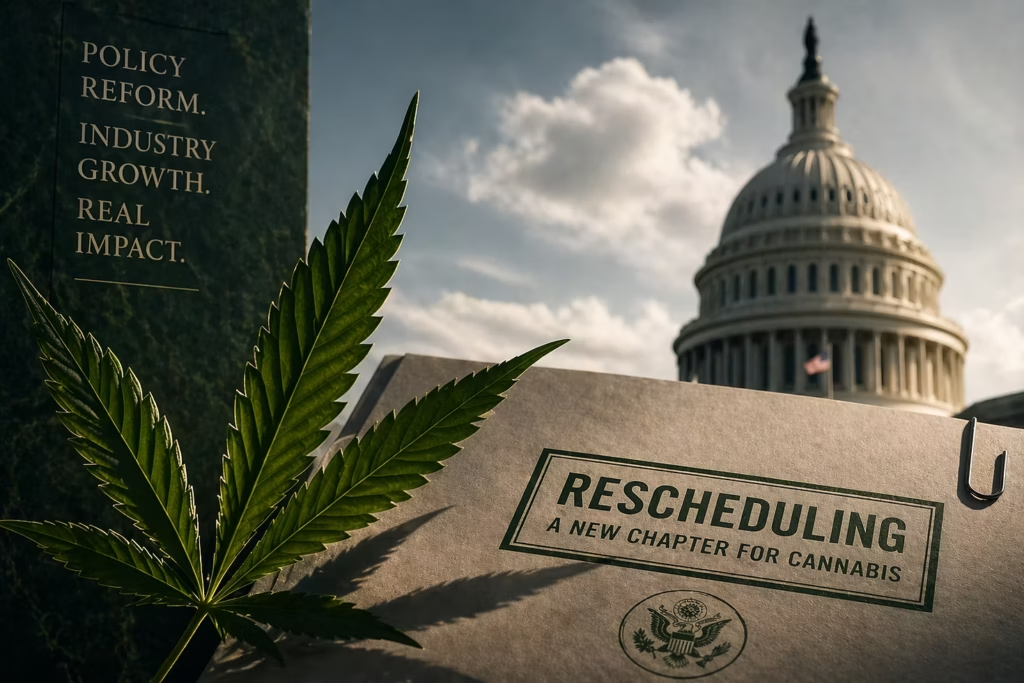
The federal government’s move to reclassify marijuana from Schedule I to Schedule III has generated major headlines across the cannabis industry. Beyond the political implications, dispensary operators should be paying attention to what this could mean from a business and real estate perspective.
While cannabis remains federally illegal, the proposed change signals a meaningful shift in how the industry is viewed financially, operationally, and commercially. That shift is likely to influence how landlords, investors, developers, and municipalities evaluate cannabis businesses moving forward.
For operators looking to grow, secure stronger locations, attract capital, or position themselves for long-term success, this moment matters.
The Biggest Immediate Impact: Taxes
For years, dispensary operators have faced one of the industry’s biggFor years, dispensary operators have faced one of the industry’s most significant challenges: IRS Code 280E.
Because cannabis was classified as a Schedule I substance, businesses were unable to deduct ordinary operating expenses, including:
- Rent
- Payroll
- Marketing
- Administrative costs
- Buildout expenses
As a result, many companies generating substantial revenue still struggled with profitability.
A move to Schedule III could dramatically change that equation by allowing standard business deductions. For many operators, the impact could be significant.
Now is the time to work closely with accountants and advisors to reassess profitability, expansion plans, and long-term growth strategies.
Cannabis Real Estate Is About to Become More Competitive
As the industry gains broader legitimacy, competition for high-quality retail space is likely to increase.
Landlords who were previously hesitant to lease to cannabis businesses may begin viewing dispensaries differently—particularly those with:
- Strong financials
- Professional branding
- Experienced leadership
- Multiple locations
- Established operational systems
This creates opportunity, but it also raises expectations.
The era of cannabis tenants occupying leftover retail space is fading. Prime retail corridors, high-foot-traffic neighborhoods, and mixed-use developments are increasingly becoming viable targets.
This is where strategic real estate planning becomes increasingly important. The operators that secure the best locations are often the ones preparing well before demand intensifies—not after.
Investors Are Looking at Cannabis Differently
ResRescheduling does not eliminate banking challenges overnight, but it does reduce perceived risk across the industry.
That matters when:
- Raising capital
- Forming partnerships
- Securing private investment
- Entering new markets
- Scaling across multiple locations
Investors are becoming increasingly selective, favoring companies that operate like sophisticated retail and hospitality brands rather than speculative ventures.
The organizations with strong systems, clear financials, and scalable infrastructure will likely attract the most interest.
Better Products, Better Branding, Higher Expectations
Schedule I restrictions made reSchedule I restrictions have long limited meaningful research.
As those barriers begin to shift, we may see:
- Greater product standardization
- Improved dosing consistency
- Expanded medical research
- More sophisticated branding
- Elevated retail experiences
As consumers become more informed, expectations will rise accordingly.
Long-term success will belong to brands that create trust, deliver a consistent experience, and establish a strong identity within their markets.
What Hasn’t Changed
Despite the excitement, operators still need to stay grounded.
Cannabis remains federally illegal.
Interstate transportation is still prohibited.
Compliance remains critical.
This is not the moment to become careless. It is the moment to become strategic.
What Smart Operators Should Be Doing Right Now
The businesses positioned to win over the next few years are already:
- Organizing financials
- Strengthening operations
- Evaluating expansion opportunities
- Reassessing lease structures
- Building relationships with landlords and investors
- Positioning themselves as long-term brands
Cannabis is evolving from an emerging industry into a more established commercial sector.
And as that transition happens, real estate, operational strategy, and brand positioning will matter more than ever.
Final Thoughts
Marijuana rescheduling is more than a policy change. It reflects a broader shift in how cannabis businesses are viewed by investors, landlords, developers, and the marketplace as a whole.
For dispensary operators, the opportunity is real—but so is the need for preparation.
The next phase of the cannabis industry will reward businesses that combine strong operations, regulatory discipline, and thoughtful real estate strategy.
Ready to Discuss Your Next Move?
As the cannabis industry continues to evolve, having the right real estate strategy can be a significant competitive advantage.
To learn more about leasing, expansion opportunities, site selection, or market conditions, contact Natasha Belizaire of The Restaurant Brokers. Natasha advises cannabis, retail, and hospitality operators on strategic real estate decisions throughout New York.